Table of Contents
ToggleIn the high-stakes world of battle, planning isn’t just important—it’s everything. Imagine trying to win a game of chess while blindfolded. That’s what it feels like without a solid battle formation plan. Whether it’s ancient warriors clashing swords or modern troops navigating complex terrains, the right formation can mean the difference between victory and a rather embarrassing retreat.
Overview of Battle Formation Planning
Planning for battle formation centers on organizing troops to maximize effectiveness. Each formation serves a specific purpose in response to the terrain, enemy strategy and troop capabilities. Historical battles, such as those fought by Napoleon, illustrate the necessity of adaptive formations that can shift in real time.
Utilizing known formations, like the phalanx or the line, enables commanders to gain advantages over opposing forces. Assessing the battlefield is crucial; factors like elevation, cover and obstacles can significantly influence formation choices. Modern military operations depend on flexibility, allowing forces to reform under pressure.
The importance of communication cannot be overstated. Clear orders ensure units understand their roles within the formation, enhancing coordination. Equally important is the integration of technology; advances in surveillance and communication tools inform strategic decisions, enabling precise adjustments.
Training is vital for troops to efficiently execute formations under duress. Drilling enables soldiers to react instinctively, aligning them with the formation’s goals during engagements. Fostering unit cohesion builds trust and efficiency, which directly impacts overall performance in battle scenarios.
Moreover, analyzing previous engagements provides vital lessons. Understanding what worked and what didn’t informs future formation planning, promoting continual improvement. In summary, a sound approach to battle formation planning directly influences the effectiveness of military operations. Each decision shapes the potential for victory in the face of adversity.
Historical Context of Battle Formations
Battle formations have shaped military engagements throughout history. Understanding their evolution offers valuable insights into present-day strategies.
Ancient Warfare Strategies
Ancient military leaders relied on specific formations to enhance combat effectiveness. The Greek phalanx exemplified coordination among soldiers, allowing for a unified front in battle. Troops lined up, creating a formidable barrier against enemies. Romans later adapted formation tactics, emphasizing flexibility and discipline within legions. These strategies laid the groundwork for organized combat, influencing military theory across civilizations.
Development Through the Ages
As warfare evolved, so did battle formations. The Middle Ages witnessed the rise of cavalry units, prompting new tactics that integrated mounted and foot soldiers. Pikes and arquebuses emerged, leading to innovative formations focused on firepower. By the 17th century, linear tactics became prevalent, maximizing the effectiveness of musket-wielding infantry. The Industrial Revolution further transformed formations, incorporating technology and logistics into strategic planning. Each advancement demonstrated the necessity of adapting formations to changing warfare dynamics.
Key Principles of Effective Battle Formation Planning
Effective battle formation planning relies on several fundamental principles. Understanding the battlefield conditions enhances strategic decision-making.
Terrain Analysis
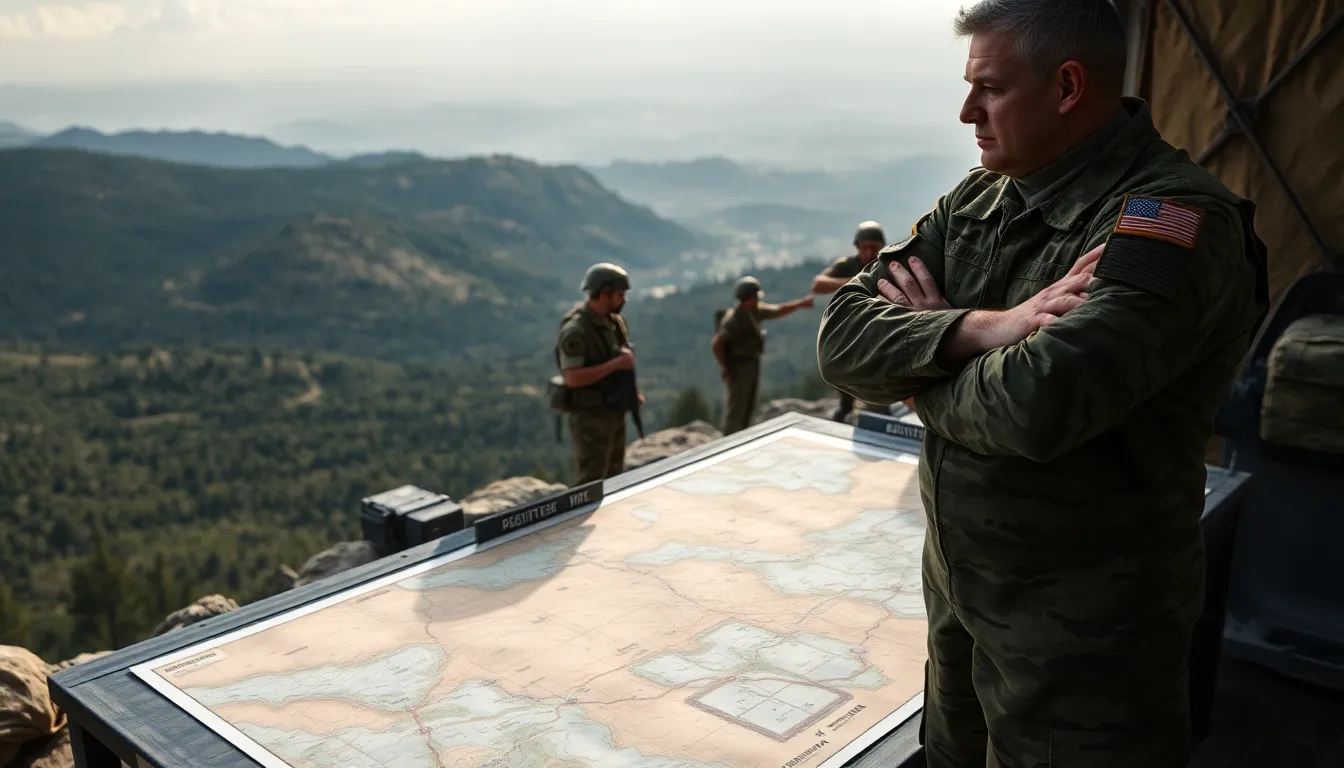
Terrain analysis involves evaluating physical landscapes to gain a tactical advantage. Features such as hills, rivers, and forests impact troop movement and visibility. Elevation offers opportunities for observation and artillery placement, while cover shields infantry from enemy fire. Observing the environment facilitates identifying choke points and ambush sites. A thorough terrain assessment is essential for optimizing formations to either exploit advantages or mitigate risks. Historical conflicts illustrate how terrain can influence battle outcomes significantly.
Troop Composition
Troop composition focuses on aligning unit strengths with strategic objectives. Assessing the number and type of soldiers guides effective formation design. For instance, heavy infantry excels in close combat, while cavalry provides mobility for flanking maneuvers. Recognizing the skills of specialized units, such as archers or engineers, further informs planning decisions. Balancing these elements ensures efficient deployment and maximizes combat efficacy. Each formation benefits from a clear understanding of individual roles and capabilities.
Communication and Coordination
Communication and coordination remain vital for the success of battle formations. Clear channels allow commanders to relay orders instantly, adjusting strategies as situations evolve. Ensuring every unit understands its role enhances synchronization during engagements. Regular training exercises reinforce this understanding, fostering teamwork and unity. Utilizing modern communication technology can streamline information sharing, enabling quicker responses to dynamic battlefield conditions. Effective coordination leads to stronger formations and improved overall effectiveness in combat scenarios.
Modern Innovations in Battle Formation Planning
Modern battle formation planning undergoes significant transformations through technological innovations and lessons drawn from recent conflicts. These factors enhance strategic effectiveness and coordination.
Technological Advancements
Drones provide real-time surveillance, allowing commanders to adapt formations dynamically based on enemy movements. Additionally, advanced data analytics software enables detailed terrain assessments, ensuring an understanding of landscape implications. Communication tools, such as secure radio networks and mobile applications, facilitate instant relay of tactical changes, leading to improved troop coordination. These innovations not only streamline decision-making processes but also significantly enhance situational awareness on the battlefield. Emerging technologies like artificial intelligence support predictive modeling, allowing forces to anticipate enemy actions and adjust strategies accordingly. Overall, these advancements continuously reshape the landscape of battle formation planning.
Case Studies of Recent Conflicts
Recent conflicts showcase effective application of innovative battle formations. In the Syrian Civil War, for example, the integration of smaller, agile units optimized for urban warfare led to successful engagement against larger forces. Vehicle-mounted weapons systems in this context transformed traditional strategies, enabling rapid response to threats. Meanwhile, during the War in Afghanistan, coalition forces often employed mixed formations that combined infantry and air support, enhancing operational effectiveness in diverse terrains. Analyzing these examples reveals how flexibility in formations directly influences outcomes, particularly when facing unconventional threats. Each case highlights the necessity of adapting formations to contemporary warfare challenges.
Effective battle formation planning is a cornerstone of military success. By understanding the complexities of troop organization and adapting to battlefield conditions, commanders can significantly enhance their strategic advantage. The integration of technology and rigorous training ensures that forces remain agile and responsive to evolving threats.
Historical lessons remind military leaders of the importance of flexibility in formation design. As warfare continues to evolve, the ability to adapt formations to dynamic environments remains crucial. Ultimately, the meticulous planning of battle formations not only shapes the outcome of engagements but also defines the future of military strategy.