Table of Contents
TogglePoppy is one of League of Legends’ most underrated champions, and 2026 has been a solid year for the Iron Ambassador. If you’ve noticed her popping up more in professional play and climbing the ladder faster than expected, you’re not imagining it. This guide covers everything you need to know to master Poppy, whether you’re playing her top lane as a brawler or supporting from the backline as an engage tool. We’ll break down her abilities, optimal builds for different roles, rune setups, and the macro decisions that separate okay Poppy players from ones who absolutely control games. Poppy in League of Legends has evolved into a genuinely threatening pick in the right hands, and this is the best time to pick her up.
Key Takeaways
- Poppy is a crowd control-focused tank who excels by disabling enemies and denying dashes through abilities like Steadfast Presence and Heroic Charge, making her a nightmare pick against mobile compositions.
- Master Poppy’s signature wall knockup mechanic with Heroic Charge—landing enemies against terrain doubles stun duration and adds bonus damage, separating exceptional players from average ones.
- Poppy’s build path differs by role: top lane prioritizes Sunfire Aegis or Hollow Radiance for tankiness and waveclear, while support Poppy focuses on pure utility items like Kaenic Rookern and Abyssal Mask for maximum crowd control uptime.
- Always itemize defensively over damage—Poppy wins by surviving long enough to land her crowd control, not by dealing raw damage.
- Position within Heroic Charge range of priority threats, use Steadfast Presence preemptively to prevent enemy dashes, and save your ultimate tactically to interrupt key enemy cooldowns rather than on even teamfights.
- In laning phase, avoid forcing trades and focus on consistent CS and farm scaling into mid-game, where Poppy’s tankiness and cooldown reduction make her a dominant teamfight disruptor.
Who Is Poppy and What Makes Her Unique
Champion Overview and Lore
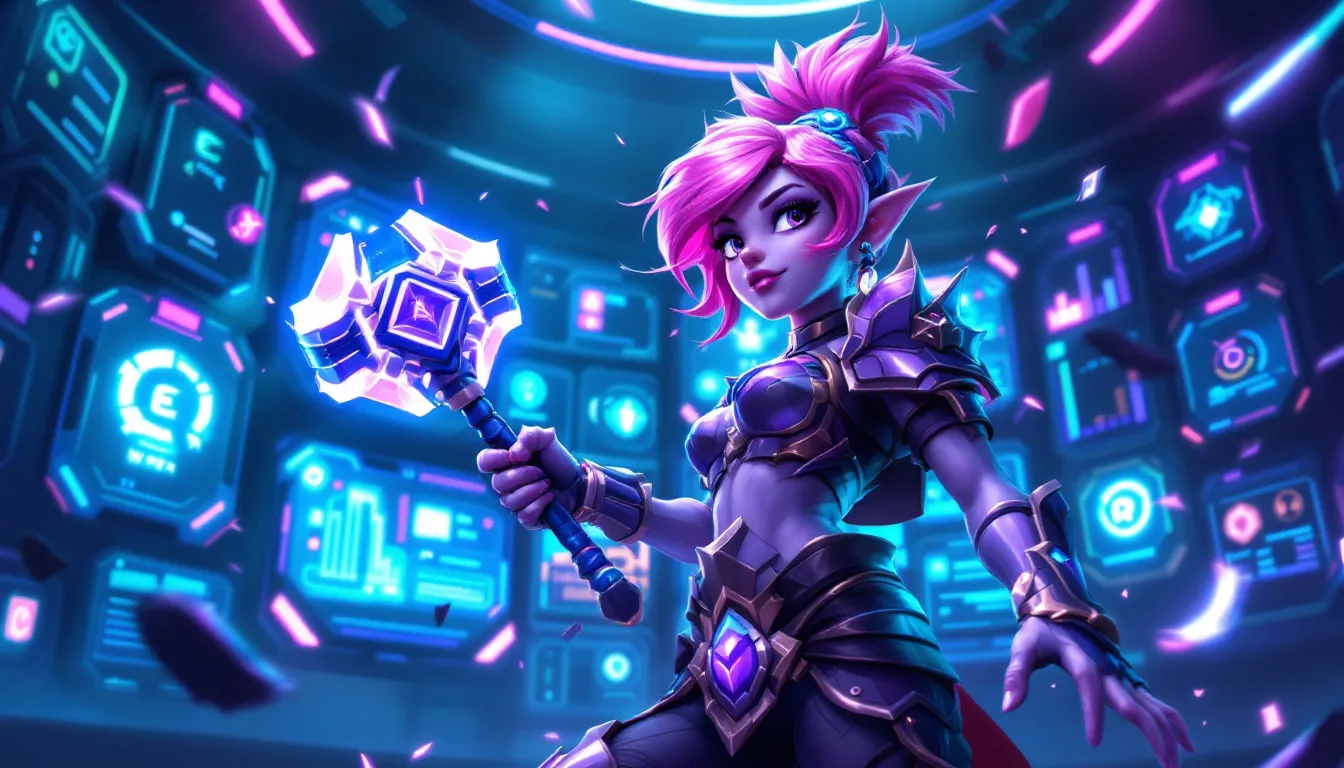
Poppy is a Yordle tank with a straightforward identity: she’s built to disable enemies and absorb punishment. In terms of lore, she’s the keeper of a sacred hammer passed down through generations of Yordles, and she takes that responsibility seriously. Unlike flashy champions, Poppy’s gameplay is all about setup, lockdown, and follow-up damage from teammates.
What makes Poppy distinct from other tanks is her kit’s emphasis on crowd control and mobility denial. She’s not a teamfight initiator in the traditional sense, she’s a disruption machine. Her Heroic Charge (E) can knock enemies into walls, her W creates zones enemies can’t dash through, and her ultimate can shut down fed carries before they get rolling. This makes her feel less like a generic melee bruiser and more like a tactical chess piece.
Strengths and Weaknesses
Poppy excels against dash-heavy teams and mobile carries. If the enemy composition features champions like Ahri, LeBlanc, or Ezreal, Poppy becomes a nightmare to play against. Her ability to shut down dashes with Steadfast Presence and lock down enemies with Heroic Charge turns her into a counter-pick that completely negates entire kits.
Her strengths also include solid tankiness with proper itemization, reliable peel for carries, and scalable utility throughout the game. She doesn’t fall off as hard as pure engage tanks when she’s built defensively, because her crowd control remains devastating regardless of gold advantage.
Her weaknesses are real though. Poppy requires positioning discipline, she’s not a pure stat-check tank who wins by right-clicking enemies. She’s also susceptible to poke damage before engages come online, which can make laning phase feel grindy. Against immobile, beefy teamfights (think Darius, Ornn, Alistar), she lacks the raw damage or sustain to 1v1 effectively. Also, if you mess up Heroic Charge positioning and don’t actually hit a wall, the ability feels terrible to use.
Ability Breakdown and Mechanics
Passive: Iron Diplomat
Poppy’s passive grants her a shield whenever an enemy casts an ability near her. This shield scales with AP and can be consumed by moving it between targets through clever positioning. The shield duration is 3 seconds, so timing matters, you want to take chip damage to refresh it rather than let it expire.
In practice, this passive is nutty in extended teamfights where spells are flying everywhere. It also makes her surprisingly durable during laning phase if you position correctly. Against champions like Zyra or Xerath who throw constant skill shots, your passive becomes a mini health bar extension. Don’t overlook using movement to keep shields on important targets during fights.
Q: Hammer Shock
Hammer Shock is Poppy’s only consistent damage ability, and it’s a combo tool more than a raw damage spell. It hits in a line, slows enemies, and creates an AoE follow-up if enemies remain in range. The follow-up can hit the same target again, doubling the damage if you position correctly.
Mechanically, Q is straightforward but timing the second hit requires practice. You want to use it while enemies are grouped or while pushing enemies into the AoE zone. In lane, it’s your trading tool, it’s not meant to kill, just to wear enemies down and set up all-ins. Max this second after E, or first if you’re building full AP (which you shouldn’t as support).
W: Steadfast Presence
This is Poppy’s hidden power and the reason she counters dashing. Steadfast Presence creates a zone where enemies can’t dash, blink, or teleport. Champions inside take reduced damage from dashes too. The zone lasts 3 seconds (at all ranks, important detail), costs mana, and has a 14-second cooldown.
The cooldown is short enough that you can chain zones in extended teamfights. Use it reactively when you see enemies committing to fights, or proactively when you know they’re about to engage. Placed correctly, W single-handedly wins fights against Lucian, Tristana, or any hyper-mobile composition. Advanced players use W’s positioning to cut off retreat routes, essentially boxing enemies into losing fights.
E: Heroic Charge
Heroic Charge is Poppy’s signature ability and the hardest to master. She dashes forward, stuns the first enemy hit, and knocks them back. If that enemy hits a wall, they take bonus damage and the stun duration doubles (from 0.75 to 1.5 seconds). This is the difference between a decent Poppy and a great one.
Pro tip: walls include terrain and some terrain you wouldn’t expect. Practice using E near jungle camps and lane walls to understand the hitbox. In fights, positioning your E so enemies get knocked into nearby walls is often worth more than hitting multiple targets. The cooldown is reasonable (10 seconds at rank 1), so E is available frequently for both offense and peel.
R: Keeper’s Verdict
Poppy’s ultimate is a channeled ability that silences and damages enemies around her. If she channels for the full duration, she can redirect the final blast toward a specific direction, knocking back the targeted area. The ult also empowers her next auto-attack and Q for a short window.
In teamfights, the goal is usually to channel as long as possible before releasing, catching out-of-position enemies. Against teamfights where enemies are even, it’s a pure crowd control tool, you’re silencing the backline and creating breathing room. The cooldown is 100+ seconds early, so it’s not an every-fight ability. Use it strategically: either to catch someone rotating or to secure a teamfight win, not just to trade health with enemies.
Best Builds and Item Recommendations
Top Lane Build Path
In top lane, Poppy can play as a teamfight tank or a side-lane bully depending on matchups. The standard build path starts Doran’s Shield for survival against poke matchups, or Doran’s Blade if you expect to win trading. Most high-elo players favor shield in majority matchups.
Your first major item is usually Sunfire Aegis or Hollow Radiance, depending on whether you need the wave-clear DPS (Sunfire) or the magic resistance + CDR density (Hollow). After that, Abyssal Mask into Force of Nature builds consistent tankiness while enabling your disruption kit. If the enemy has hard-AD threats like Darius or Renekton, Thornmail is legitimate instead of AP items.
Late-game Poppy top lane loves Kaenic Rookern against healing-heavy teams, Adaptive Helm if magic damage is stacking, and Spirit Visage as a flexible defensive option. The goal is to hit 200+ armor + MR while keeping 40% CDR (from runes + items) so you have consistent uptime on your disruption abilities.
Support Build Path
Support Poppy has a different priority curve. You’ll start Relic Shield into Kaenic Rookern or Hollow Radiance, picking whichever the enemy team needs you to itemize against. The key difference is that support Poppy needs to build pure utility without sacrificing tankiness.
Your second item should be Kaenic Rookern if you skipped it, then Abyssal Mask or Force of Nature depending on MR needs. You’re itemizing for CDR density and durability, every 10% CDR gets you more E and W casts per fight. Since you’re not farming, item completion is slower, so pick efficient items that give multiple useful stats.
For support, skip damage items entirely. Your job is crowd control and peel, so items like Thornmail (against AD heavy), Spirit Visage (flexible MR), and Adaptive Helm (against spam-heavy mages) are your carries. Late game, consider Zhonya’s Hourglass if you’re getting focused, the stasis lets your team reposition while you sit invulnerable.
Core Items and Situational Choices
Sunfire Aegis is core into waveclear-heavy teamfights or when you need fast waveclear to prevent getting shoved in. Hollow Radiance is better when you don’t need the wave damage and prefer the raw tankiness and cooldown reduction.
Situational picks depend on enemy composition:
- Thornmail: Enemy team has 2+ healing sources or a healing carry (like Goredrinker Darius, healing ADCs).
- Kaenic Rookern: Similar to Thornmail but gives you MR + healing reduction, perfect against balanced damage compositions.
- Adaptive Helm: Stacking magic damage or spammy mage combinations (like Lux + Viktor).
- Force of Nature: Pure MR scaling with movement speed, pick this when you’re low on MR items and need mobility for positioning.
- Spirit Visage: Flexible MR that lets you heal effectively from your own abilities or teammates.
- Zhonya’s Hourglass: Getting focused hard in fights: the stasis breaks engages or lets you sit out burst phases.
Always prioritize tankiness over damage. Poppy works because she survives long enough to land her crowd control. A dead Poppy deals zero disruption, so itemize like a champion who needs to be alive for her abilities to matter.
Runes and Summoner Spells
Primary Rune Setups
The dominant rune setup for Poppy is Resolve with Aftershock as your keystone. Aftershock synergizes perfectly with her crowd control, landing E or ult grants instant armor and magic resistance plus a damage burst on your next auto. This makes her trading pattern extremely efficient.
Your secondaries in Resolve are typically Font of Life (healing allies when you CC enemies, perfect for team fights), Conditioning (free defensive stats that scale), and Overgrowth (health scaling). This combination makes Poppy ridiculously tanky by mid-game without forcing early item sacrifices.
Alternatively, Grasp of the Undying works in lane-dominant matchups where you expect to win consistently. Grasp gives you lane sustain and bonus damage when hitting Q or auto-attacks. It’s less teamfight-focused than Aftershock but better when you want to bully early. Most pros default to Aftershock for the reliable teamfight value.
A niche but viable setup is Glacial Augment if you’re support Poppy in a kiting-heavy meta. Glacial slows on item actives and auto-attacks, giving you additional peel. But, this requires high-cost active items and is less intuitive than Aftershock.
Secondary Runes and Stat Shards
Your secondary tree should be Precision or Domination depending on whether you value sustain or early damage. With Precision, take Triumph (true damage to nearby enemies + healing on kills) and Tenacity (CC reduction stacking with items). This is the standard for top lane.
With Domination, take Cheap Shot (extra damage on CCed enemies) and Eyeball Collection (scaling AD/AP based on takedowns). Domination pairs well with an aggressive early game where you expect kills from your E + allies.
For stat shards, the baseline is +8 ability haste, +8 ability haste (or + 5% CDR in older patch notation), and +6 armor (or +8 MR against AP-heavy). Some players prefer +10% attack speed instead of one ability haste if they’re itemizing tank and want better auto-attack trading, but haste is almost always correct.
Against heavy poke-heavy lanes (like Jayce or Nidalee), swap your third shard to +6 armor or +8 MR depending on their primary damage type. This frontloads your defenses so you don’t get chunked out before your tankiness items come online.
Laning Phase Strategy and Early Game Tips
CS and Trading Patterns
Poppy’s laning goal is consistent CS and safe trading through Q spam. Your damage isn’t high enough to all-in most matchups early, so treat laning as an XP + CS marathon. Aim for 5 CS per minute early (very achievable), then scale to 6+ later when you clear faster.
Your trading pattern is straightforward: walk up to minions you need to last-hit, use Q if enemies come close (the slow lets you reset positioning), and back off. Don’t force extended trades, each trade should last 3-5 seconds. Your passive shields absorb initial damage, and your tankiness means you win extended exchanges if enemies stick around, but there’s no reason to force it.
When your jungler paths top, immediately grouping for a dive or gank is correct if the enemy overextends. Poppy’s E makes diving teamfight-proof, so the two of you can easily convert jungle pressure into kills. Even if the dive fails, you’ve established that the lane isn’t a free farm zone for your opponent.
Matchup Advantages and Disadvantages
Poppy hard-counters dash-reliant champions. Against Riven, your W negates her entire fight-in pattern and E knocks her backward, so you win by default. Similar logic applies to Fiora, Yasuo, and Quinn, they’re all free matchups if you play defensively and use W appropriately.
Against immobile, beefy threats like Darius, Ornn, or Sion, you’ll have a harder time. These champions will eventually out-damage you in extended trades, so your game plan is to poke safely, scale, and win through superior CC in teamfights. Don’t fight them 1v1 after they get items: instead, focus on not feeding and showing up to teamfights.
Ranged top laners like Jayce or Teemo are skill matchups that depend on how well you execute your spacing. Let them poke, use your passive shields to absorb the harassment, and look for all-ins when cooldowns are down. Post-6, your ult can catch them out if they overextend.
The general rule is simple: your goal early is not to win, but to not fall behind. Poppy scales hard into mid-game when your tankiness and CDR come online, so focus on farm and survival. Every successful teamfight with your crowd control active justifies the farm-focused early.
Mid and Late Game: Teamfighting and Positioning
Teamfight Role and Engage Patterns
In teamfights, Poppy’s role depends on the scenario. If enemies are grouped and overextended, she’s a playmaker who initiates with E into walls, creating free follow-up for her team. If enemies are spread and her team is losing, she’s a reactive disruptor who peels. Context matters.
Your positioning rule is straightforward: stay within E range of the enemy carry or threat. If your ADC is protected, position toward the enemy AD carry. If your support is handling backline, position toward their mid laner. The goal is to threaten the most dangerous enemy with your lockdown while your team handles secondary threats.
When you see an enemy overstep, E them into the nearest wall. If no wall is nearby, use E for the stun and let your team collapse. Channel your ult when enemies are grouped or when you need to interrupt enemy engage patterns. Your ultimate is your teamfight equalizer, it buys time and resets fight positioning.
Advanced pattern: Use W preemptively when enemies are about to engage. You’re essentially telling them “you can’t dash here,” forcing them into either a disadvantageous fight or a repositioning delay. This passive control is why Poppy feels so oppressive in organized teamfights.
Peeling and Protecting Carries
Poppy’s peel is world-class. When enemies focus your carry, E the engager away (preferably into a wall), then use W to protect the carry’s escape route. You’re creating a bubble around your ADC that’s extremely hard to penetrate.
If multiple enemies dive, use your ult to silence their engage and scatter them, buying your carry space to kite. This sequence should happen before your carry takes significant damage, peel is about prevention, not rescue. Timing your CC before the fight escalates is what separates good and great Poppy supports.
Against assassins like LeBlanc or Fizz, your W becomes your entire game plan. The moment they activate, W is up and they can’t combo your carry effectively. Poppy becomes a walking “no” button against any dash-based engage, which is why she’s so valued in pro play. Recent performances at LoL Esports showcase Poppy’s strength in preventing enemy backline access, confirming her viability in high-level coordination.
Common Mistakes to Avoid
Wasting E without wall setup. Landing E in open space means you’re just using it for a stun. Your opponent gets back up and the ability felt mediocre. Always think about walls when you E, if there’s no wall nearby, use your Q or W instead. This is the difference between “okay Poppy” and “annoying Poppy.”
Over-relying on your ultimate for teamfight wins. Your ult is strong but not a guaranteed victory. Some players use it and expect the fight to be won, then get collapsed on while channeling. Use ult tactically: interrupt key cooldowns, create escapes for your team, or catch immobile carries. Don’t waste it on even teamfights.
Itemizing damage when you’re behind. It’s tempting to build Lichbane or Nashor’s Tooth for extra damage, but doing so makes you fragile. Behind Poppy needs to be tanky enough to survive long enough to land her CC. Tanks win when they’re hard to kill: supports win when enemies can’t all-in. Build defensive items and let your crowd control do the heavy lifting.
Forgetting that W blocks dashes, not attacks. Your W is amazing against mobile carries but useless against stat-check auto-attackers. You can’t W a Trundle or Volibear, it just blocks their dashes if they have them. Know when your W is relevant and when you need pure tankiness instead.
Not utilizing passive shielding in lane. Your passive is essentially free health in poke-heavy lanes. Position such that enemies cast spells on you (even minions count), refresh your shield, and you suddenly have a health bar advantage. Passive players sit at low health passively: good Poppy players constantly manage their shields to maintain a health advantage.
Missing wall knockups by poor positioning. Practice using E against terrain. Wall knockups are the difference between a stun and a stun + knockback bonus damage. Spend time in practice tool learning walls around mid lane, jungle, and lane.
Conclusion
Poppy is a champion that rewards understanding of positioning, CC timing, and matchup knowledge. She’s not mechanically flashy or braindead tanky, she’s a thinking player’s champion who thrives when you respect crowd control windows and wall positioning. The meta hasn’t been kinder to disruptive tanks in a long time, and 2026 is a genuinely good year to invest in mastering her kit.
If you’re looking to climb out of your current rank, Poppy offers a skill ceiling that separates her from stat-check champions. You can impact fights with clean E knockups into walls, chain W zones to control territory, and ult at the exact moment enemies commit. These mechanical moments compound over games and build consistency.
Start with the rune and build recommendations, focus on not dying in laning phase, and gradually improve your teamfight positioning as you play. Resources like Mobalytics provide real-time matchup data and build statistics if you want to optimize your itemization further. Within a few weeks of dedicated practice, you’ll notice that games where you play correctly feel almost unwinnable for your opponents. That’s Poppy at her best, not a burst threat, but a wall your enemy team can’t break.