Table of Contents
ToggleIf you’re a League of Legends fan, you’ve probably seen them, those stunning figures of Ahri, Lux, Yasuo, and countless other champions displayed on gaming shelves around the world. League of Legends figures have exploded from niche collectibles into a thriving market that merges gaming fandom with serious collecting culture. Whether you’re a casual player picking up a figure of your main or a seasoned collector hunting rare variants, the landscape of League of Legends figures in 2026 is more diverse and accessible than ever before. This guide breaks down everything you need to know: what’s available, where to find it, how much to expect to spend, and how to build a collection that actually feels cohesive and rewarding.
Key Takeaways
- League of Legends figures range from affordable blind boxes ($10–$30) to museum-quality luxury statues ($300+), offering entry points for casual fans and serious collectors alike.
- K/DA Ahri figures are the most sought-after collectible, with mint condition variants commanding $80–$300+ depending on edition, rarity, and production numbers.
- Strategic collection building requires a defined theme (by champion, skin line, or rarity), a realistic budget, and prioritizing quality over quantity to create a cohesive and rewarding display.
- Early releases, regional exclusives, and limited production runs drive resale value appreciation, with discontinued figures sometimes appreciating 200–400% over original retail prices.
- Proper display and maintenance—including LED lighting, climate-controlled storage, and gentle handling—preserve figure condition and protect investment value long-term.
- Japanese and Korean retailers offer exclusive variant figures unavailable in Western markets, while secondary platforms like Mercari and collector Discord servers unlock rare out-of-print pieces.
What Are League Of Legends Figures?
League of Legends figures are collectible statues, action figures, and merchandise representations of champions, skins, and iconic characters from the game. They range from high-end, museum-quality statues costing hundreds of dollars to affordable blind box figurines you can grab for ten bucks. Some are poseable action figures designed for play and display flexibility. Others are intricate PVC or resin sculptures meant purely for exhibition, frozen in dramatic poses that capture a champion’s essence, Yasuo mid-windslash, Ahri with tails flowing, or Lux channeling her prismatic magic.
These figures serve multiple purposes in the gaming community. They’re nostalgia pieces for long-time players, gifts for esports fans, display centerpieces for streaming setups, and genuine investments for collectors tracking rarity and market trends. The quality and craftsmanship can vary dramatically depending on the manufacturer and price point, so understanding what you’re buying is crucial before dropping cash.
Types Of League Of Legends Figures
Official Riot Games Statues
Riot Games produces high-end statues through partnerships with manufacturers like Infinity Studio and First 4 Figures. These are officially licensed, often limited-edition releases that focus on premium quality and detail. Think intricate paint work, dynamic poses, and collectible packaging. A single statue from this category easily runs $150–$400+, but the craftsmanship justifies the price for serious collectors. Examples include the K/DA Akali statue and the Pulsefire Thresh premium line. These figures often come with certificates of authenticity and are produced in limited numbers (sometimes as few as 500 units worldwide), making them genuinely rare.
Riot also releases smaller, more affordable official merchandise through their merch store, typically priced between $20–$60. These are more accessible entry points but still carry the official seal and support the game’s creators directly.
Third-Party Collectible Brands
Companies like Figma, S.H. Figuarts, and various Korean manufacturers produce unlicensed or fan-made interpretations of League champions. These aren’t officially endorsed by Riot, but many are exceptional quality. Figma figures are particularly popular for their articulation, you can pose them realistically, which appeals to collectors who want dynamic displays rather than static statues. Expect to pay $60–$150 for premium third-party figures.
Chinese and Korean manufacturers also flood the market with mid-tier figures ($30–$80 range). Quality is wildly inconsistent, some rival official releases, others feel cheap and plasticky. Research specific releases on collector forums before buying.
Limited Edition & Exclusive Releases
Both Riot and third parties periodically drop limited-edition figures tied to specific events, anniversaries, or skin releases. PROJECT skin lines often get exclusive figures. K/DA collaborations (especially with music artist partnerships) spawn collectible variants. Esports-themed figures commemorating Worlds or regional championships are highly sought after because they’re time-locked, once they’re gone, resale prices spike.
Exclusives sold through specific retailers (Amazon Japan exclusives, regional retailers, event-only releases) create artificial scarcity. A figure limited to 1,000 units sold only at a Korean online retailer becomes a holy grail for Western collectors. This is where the secondary market really thrives.
Popular Characters & Most Sought-After Figures
K/DA & Prestige Line Characters
K/DA Ahri is the undisputed heavyweight champion of League figures, she’s gorgeous, instantly recognizable, and available in multiple variants (base K/DA, K/DA All Out, K/DA Superstar, prestige versions). Prices for mint condition K/DA figures range from $80 for older blind box versions to $300+ for premium statues. Collectors actively hunt for early releases, which command premiums.
K/DA Evelynn, Kai’Sa, and Akali round out the group, each with their own loyal collectors. Evelynn figures tend to be priced slightly higher ($100–$250) because she’s less commonly produced than Ahri. The Prestige skin line spawned figures featuring champions in gold-accented, luxury aesthetic variants, Prestige Lux, Prestige Qiyana, and Prestige Akali attract collectors seeking that high-fashion vibe.
Project & Pulsefire Skin Line Figures
PROJECT Yasuo figures are incredibly popular with mid-lane main collectors and cyberpunk aesthetics fans. The sleek design translates beautifully to 3D form, and multiple manufacturers have tackled him, creating a buyer’s choice of price points ($40–$200+). PROJECT Jhin figures appeal to support/ADC combo fans and are consistently among top sellers.
Pulsefire Thresh and Pulsefire Ekko belong to a space-age, futuristic skin line that visually pops on display. These tend toward the premium end ($150–$350 for high-quality versions) because the intricate design justifies manufacturing costs. Collectors often display entire PROJECT or Pulsefire collections together because the aesthetic cohesion is striking.
Championship & Esports-Themed Collectibles
Figures commemorating Worlds, MSI, or regional championship victories command respect among esports fans. A 2022 Worlds Ahri figure or a limited World Championship Kai’Sa statue becomes a time capsule of a specific competitive moment. These rarely drop below their original retail price and often climb because new releases replace them quickly.
Team-branded figures (regional championship trophy statues, team-specific color variants) appeal to esports hobbyists. If your favorite team won Worlds, a figure marking that achievement hits differently than a generic champion statue.
Where To Buy League Of Legends Figures
Official Riot Games Merch Store
The League of Legends official merch store (available regionally) is the safest, most guaranteed authentic source. You’re buying directly from Riot, ensuring legitimacy and often getting exclusive items unavailable elsewhere. Stock rotates seasonally, and popular items sell out fast, setting up notifications or checking weekly is worth it if you’re after specific releases.
Pricing is transparent (no hidden markups), but you’ll pay premium prices for official releases. Shipping can be pricey for international orders, and tax varies by region. Availability is sometimes limited to certain countries, which can be frustrating for collectors outside primary markets.
Third-Party Retailers & Marketplaces
Amazon, eBay, AliExpress, and specialty gaming retailers stock figures from multiple manufacturers. Competitive pricing and variety are huge advantages, but authenticity verification requires research. Read seller reviews carefully, check return policies, and inspect photos for quality assurance before committing.
Japanese retailers (Amiami, Rakuten) are goldmines for importing exclusive releases and variant figures not available in Western markets. Shipping costs are higher, but selection is unmatched. Korean retailers (Coupang, Korean specialty shops) are increasingly popular for mid-tier figures.
Specialty collectible shops (local comic/gaming stores) sometimes stock league figures and can offer personalized recommendations. Supporting local businesses is rewarding, and you avoid shipping costs.
Secondary Market & Collector Platforms
Mercari, Grailed, eBay’s secondhand market, and collector-specific Discord servers are where the hunting really happens. Resale prices spike for out-of-print figures or exclusive variants. Early K/DA releases, limited esports editions, and rare third-party variants move through these channels constantly.
Condition matters enormously on secondary markets. “Mint in box” commands 30–50% premiums over “opened but displayed” or “loose.” Serious collectors track specific figures across multiple platforms, setting alerts for underpriced listings.
Community forums (Reddit’s r/LeagueOfLegends, collector-specific subreddits, dedicated Discord servers) occasionally surface private sales, group buys, and pre-orders from international sellers before mainstream availability. Building relationships in these communities unlocks early access to drops.
Pricing, Rarity & Investment Value
Understanding Figure Pricing Tiers
Budget tier ($10–$30): Blind box figures, affordable PVC statues, entry-level merchandise. Quality is hit-or-miss, but perfect for casual fans or testing waters before bigger investments.
Mid-tier ($40–$100): Solid-quality figures with decent detail, good articulation if they’re action figures, or respectable static poses for statues. Most collectors own figures in this range, quality-to-price ratio is optimal.
Premium tier ($100–$300): High-end official releases, imports from specialty manufacturers, or limited editions. Exceptional craftsmanship, materials, and packaging. Serious collectors’ staples.
Luxury tier ($300+): Museum-quality statues from exclusive manufacturers like First 4 Figures or Infinity Studio. Limited to dozens or hundreds of units globally. Investment-grade pieces that appreciate over time.
Pricing isn’t purely based on character popularity. Rarity, production numbers, material quality, paint detail, base design, and packaging all factor in. A lesser-known champion in a stunning prestige skin might command higher prices than a mediocre Ahri figure.
Rarity Factors & Collectibility
Production numbers are the primary rarity driver. Riot releasing 5,000 units of a figure means it’ll stay accessible and relatively cheap. Limited to 500 units? Resale prices climb as demand outpaces supply.
Regional exclusivity creates artificial scarcity. A figure sold only in Korea or Japan becomes a holy grail for Western collectors, driving prices up. Early releases (figures dropped years ago) are harder to find and command premiums simply from age and availability.
Packaging condition matters for collectors. Figures still in original, undamaged boxes are worth significantly more than loose figures. Rare variants (color variants, paint errors that became collectible, signed editions) are mini-holy grails within the collecting community.
Condition of the figure itself is critical. Paint flaws, loose joints, missing accessories, or fading reduce value. Mint condition commands premiums: played-with or displayed figures are worth 40–70% of mint prices.
Resale Value & Long-Term Investment Potential
Early K/DA figures have appreciated significantly. A figure originally priced at $50 in 2019 now fetches $150–$250 if mint, depending on rarity. Similarly, early Prestige skin figures and limited Worlds commemorative statues have climbed in value.
But, not all figures appreciate. Mass-produced, easily restocked items depreciate or stay flat. A figure reprinted multiple times won’t gain value: new versions suppress demand for older ones.
Investment potential exists, but it’s speculative. Buy figures you actually like displayed, appreciate any value gain as a bonus. Factors that drive appreciation include:
- Discontinuation: Once Riot stops producing a figure, supply dwindles and demand climbs.
- Skin rework/buff: A champion who gets major gameplay updates or cosmetic redesigns sometimes sees old figure interest spike.
- Esports moment: A champion that dominates Worlds that year sees renewed interest in related figures.
- Material scarcity: If manufacturers face production issues (supply chain problems, material shortages), existing figures gain value.
Don’t buy solely as investment. The community needs collectors who genuinely appreciate pieces, not speculators flipping figures for quick profit. The healthiest collections are passion-driven.
Displaying & Caring For Your League Of Legends Collection
Display Tips For Maximum Impact
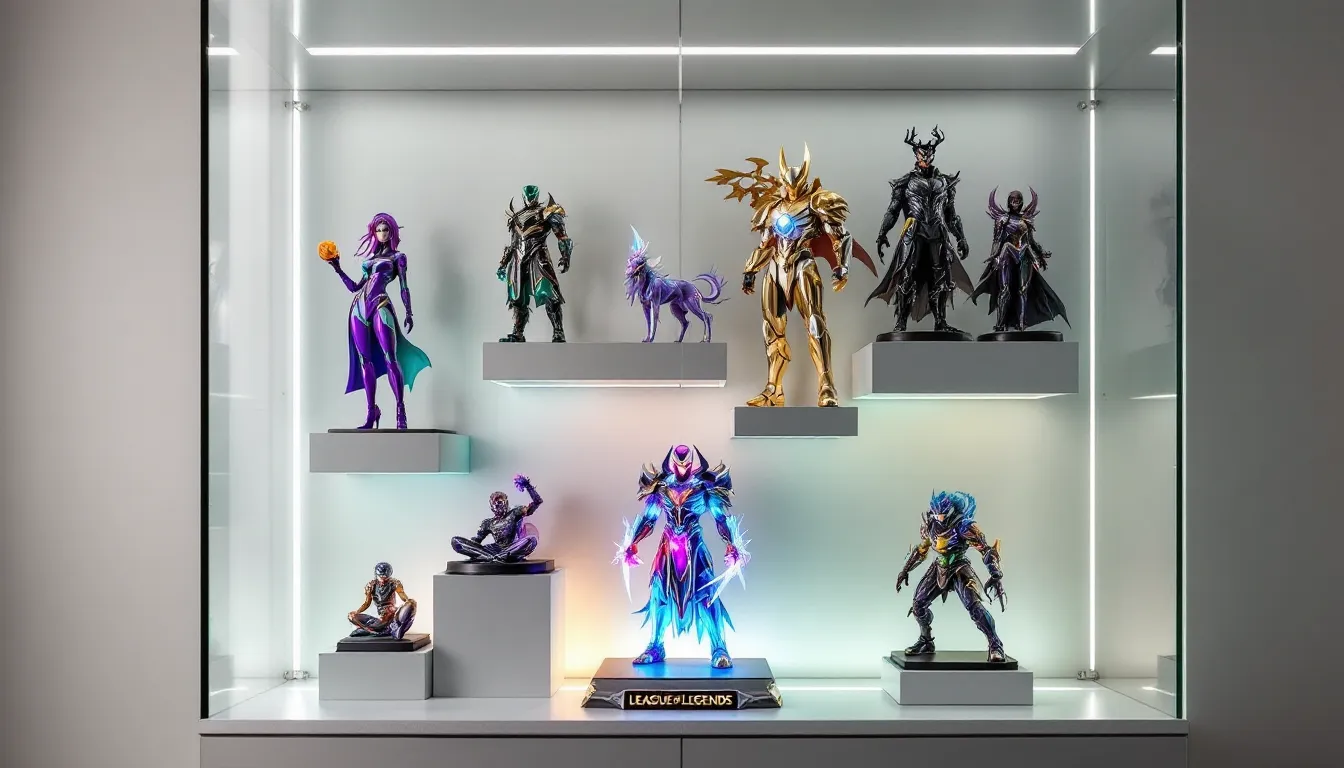
Grouping by skin line or theme creates visual cohesion. Display all K/DA figures together, or dedicate a shelf to PROJECT champions. This transforms individual pieces into a curated narrative rather than scattered toys.
Lighting matters more than people realize. A good LED strip (warm white or RGB) behind or above your collection dramatically enhances paint detail, metallic accents, and overall presence. Figures in darkness feel dead: well-lit figures pop.
Avoid direct sunlight. UV exposure fades paint, yellows white plastic, and degrades materials over time. Position shelves away from windows or use UV-filtering glass doors. A $50 glass display cabinet protects your collection from dust, pets, and fading while keeping it visible.
Height variation prevents displays from feeling flat. Use risers, stacked books, or tiered shelving to create depth. A tall Thresh figure towering over smaller support champions creates visual drama.
Negative space is your friend. Don’t cram every figure onto every shelf. Breathing room between pieces lets each figure be appreciated individually. A collection of fifteen figures on a shelf feels cluttered: the same figures spread across two shelves with space between them feels curated.
For streaming or content creation, invest in a dedicated display shelf with adjustable lighting and a clean background. Your collection reflects your brand as a content creator.
Maintenance & Storage Best Practices
Dust regularly using a soft microfiber cloth or soft-bristle brush. Never use paper towels or rough fabrics, they scratch paint. For hard-to-reach areas, compressed air works well.
Store in climate-controlled environments. Extreme heat warps plastic and paint, high humidity encourages mold and corrosion, and low humidity causes materials to become brittle. Room temperature (65–75°F) and moderate humidity (30–50%) are ideal.
Keep figures in their original packaging if you’re not displaying them. Original boxes provide protection and retain authenticity for resale. For long-term storage, acid-free tissue paper inside boxes prevents degradation.
Handle carefully and infrequently. Oils from skin, dust transfer, and accidental drops are figure killers. Wash hands before handling, and designate figures as “display only” if possible.
Separate articulated figures from their boxes if displaying. Action figures degrade if left in cramped packaging. Display them, store boxes separately in a climate-controlled closet.
Protect from pets and children (unless they’re yours and you’re comfortable with figure interaction). A high shelf or locked display case prevents accidents. Curious hands and curious paws are figure nemeses.
Document your collection. Take photos of each figure, note purchase date and price, and maintain a simple spreadsheet. This helps with insurance claims, resale valuation, and tracking completion goals. Serious collectors photograph figures from multiple angles and note any manufacturing quirks or paint variations.
Building A Cohesive Collection Strategy
Random collecting leads to shelf chaos and financial regret. Strategic collecting means intentional acquisition aligned with a clear vision.
Start with a theme. Focus on one champion across all skins (collect every Ahri figure ever made). Focus on one skin line (complete PROJECT collection). Focus on one role (every ADC figure). Focus on rarity and investment value. A defined theme creates identity and prevents impulsive purchases that don’t fit.
Set a budget and stick to it. Allocate monthly spending ($20, $50, $200, whatever’s realistic). Premium figures tempt you to overspend. A budget prevents regrettable impulse buys and keeps collecting sustainable long-term.
Prioritize quality over quantity. Five exceptional figures you love beats twenty mediocre ones. Each piece should earn its shelf space either through craftsmanship, rarity, or personal attachment.
Mix price points strategically. Don’t go all-in on luxury figures, budget constraints hit hard. Instead, combine budget blind boxes ($15), mid-tier quality figures ($50–$80), and occasional premium splurges ($150–$200). This diversity keeps collecting fresh and sustainable.
Hunt for synergies between figures. K/DA and Prestige skin lines share visual language: displaying them together feels natural. PROJECT and Pulsefire have cohesive aesthetics. Building intersecting themes (champions who share skin lines, champions from the same region of Runeterra) creates narrative depth.
Track your collection publicly. Spreadsheets, collection photos posted in Discord servers, or personal blogs serve multiple purposes: accountability to your collecting goals, community engagement, and pressure-testing whether new acquisitions genuinely fit. Sharing your collection often leads to trading opportunities, tips on underpriced listings, and collector friendships.
Don’t chase completion obsessively. Some figures are prohibitively expensive or impossible to find. Accept that gaps exist. A “95% complete PROJECT collection” is a legitimate achievement, missing one ultra-rare variant doesn’t diminish your collection’s value.
Like League of Legends Ezreal: The Prodigal Explorer, building a collection is a personal journey. Your collection reflects your taste, your favorite champions, and your commitment to the game. Authenticity matters more than completeness. Collect what resonates with you, and your display will feel genuine rather than like a checklist.
Conclusion
League of Legends figures represent far more than plastic or resin, they’re physical manifestations of champions you’ve invested hours into mastering, skins you’ve admired on loading screens, and moments from esports history that shaped the competitive landscape. In 2026, the figure market is more accessible and diverse than ever, with options for every budget and collecting philosophy.
Whether you’re starting with your first blind box figure or hunting rare early K/DA variants, the collecting community is welcoming and knowledge-rich. Research before buying, invest in quality over quantity, display thoughtfully, and let your collection tell your story as a League player and fan. The market will continue evolving, new skin lines will spawn must-have figures, esports moments will create commemorative pieces, and secondary market prices will fluctuate. Stay informed through community forums and collector networks, but remember the core principle: collect what makes you happy.
Your collection is an extension of your passion for the game. Build it intentionally, care for it properly, and enjoy the hunt. That’s what collecting League figures is really about.