Table of Contents
ToggleSummoner’s Rift isn’t just a backdrop, it’s the battlefield where games are won and lost. Whether you’re climbing ranked solo queue or studying VODs of pro teams at the highest level, understanding League of Legends map layout and regions is the foundation separating hardstuck players from consistent winners. The map’s design has evolved since its inception, but the core principle remains: control the right areas at the right time, and victory follows. This guide breaks down every crucial detail about Summoner’s Rift, from lane positioning to jungle tracking, so you can make better decisions on every screen you’re looking at in 2026.
Key Takeaways
- Understanding the League of Legends map layout across the three lanes, jungle, and objectives is the foundation separating climbing players from those stuck in lower ranks.
- Vision control through strategic ward placement and denying enemy wards creates information asymmetry that wins fights before they start.
- Tracking the enemy jungler and monitoring the minimap every 3–5 seconds prevents avoidable deaths and enables better decision-making throughout the game.
- Baron Nashor and Dragon soul are game-deciding objectives that should drive your team’s macro strategy based on your composition’s win condition.
- Wave management and timing rotations to match objective spawns unlock rotations and prevent your team from arriving to teamfights too late or losing free objectives.
- Adapting your positioning and decisions to your team’s win condition—whether scaling, early aggression, or teamfighting—is what separates elite macro players from mechanical players who roam aimlessly.
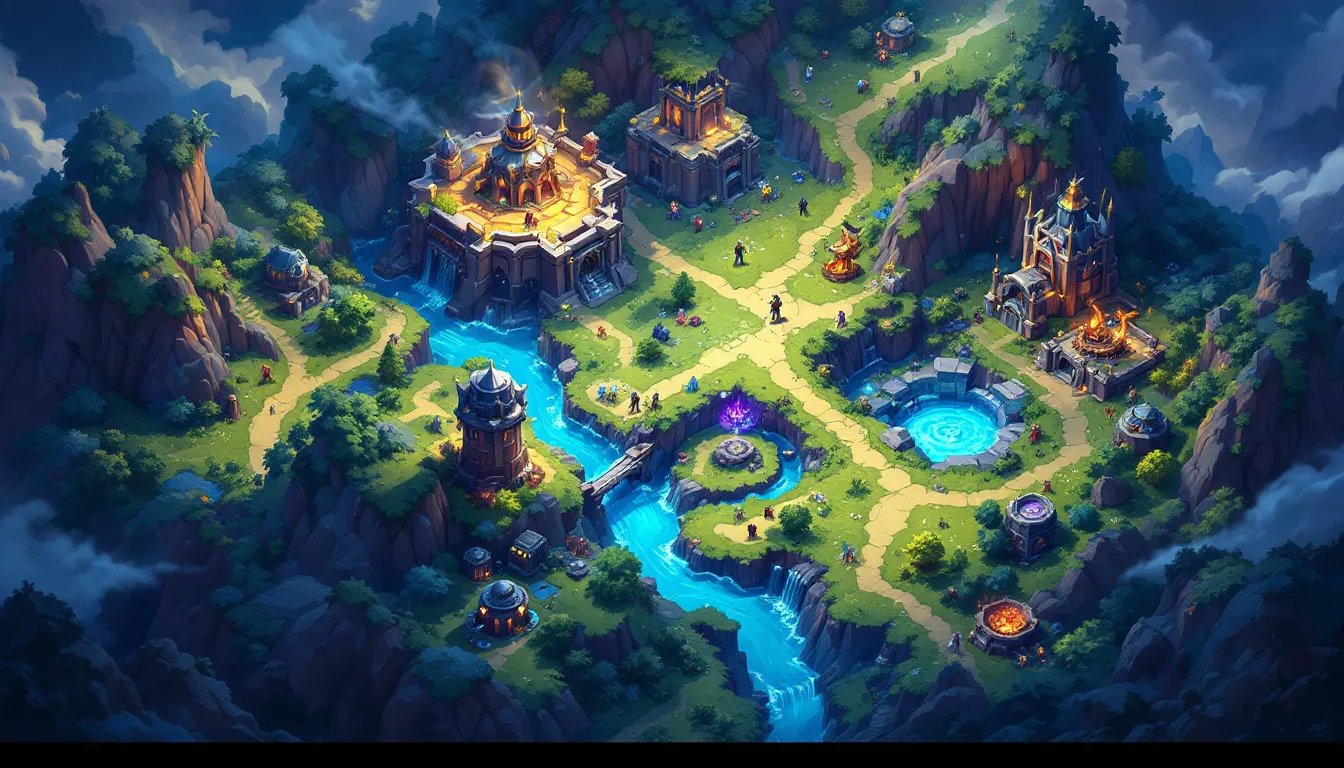
Understanding Summoner’s Rift Layout and Core Regions
The Three Lanes: Top, Middle, and Bottom
Summoner’s Rift splits into three distinct lanes, each with its own strategic identity. The Top Lane stretches along the map’s upper edge, home to bruisers, tanks, and split-push champions who thrive in isolated 1v1s. The lane’s length rewards patient macro play, a top laner can’t immediately impact bot lane fights, which means timing and decision-making become critical.
The Middle Lane serves as the map’s nexus. Mid laners maintain the shortest rotation distance to both jungle camps and side lanes, making them the pivot point for early ganks and skirmishes. Control of mid lane often dictates which team can move freely across the map without fear of getting caught. Champions here typically have high damage output or crowd control to enable quick skirmishes.
The Bottom Lane hosts two players: the ADC (attack damage carry) and Support. This lane sees the earliest action in most games, as junglers prioritize bot for level 3 ganks and skirmishes. Wave dynamics here differ from other lanes since two players contest it, creating unique trading patterns and recall timing windows.
Jungle Territory and Neutral Objectives
The Jungle encompasses everything between the lanes, a roaming space where the jungler farms camps and hunts for opportunities. Understanding jungle entrances and exit routes is crucial for both junglers and laners. Each lane has a jungle exit point that opens toward either the enemy or allied base, and experienced players track these paths constantly.
Key jungle camps include the Krugs and Raptors on the outer edges, Wolves in the central area, and the Gromp near bot lane. Camp respawn timers start at 100 seconds and decrease as the game progresses. A jungler’s economy depends on efficient farming, so knowing camp locations and their respawn times determines early game pressure.
The jungle also contains two critical neutral objectives: Baron Nashor and Dragon. Both sit in their own pits and require team coordination to secure. These aren’t just camps, they’re windows into game-deciding team fights and macro decisions.
Base Structures and Defensive Mechanics
Each team’s base consists of interconnected structures that scale in danger as players approach them. The Outer Turrets provide the first defensive line in each lane, sitting at roughly the 5-minute mark of a game’s average progression. Once destroyed, the Inner Turrets take over, positioned closer to the base and harder to siege without coordination.
The Inhibitor turret guards the inhibitor itself, destroying an inhibitor spawns super minions in that lane, a massive economic and tactical advantage. Most games swing around inhibitor control. The two Nexus Turrets form the final defense, and the Nexus itself is the objective. Destroy it, win the game.
Turrets gain damage reduction based on nearby allied minions and champions, which is why split pushing without proper wave setup is risky. Understanding tower aggro mechanics, how towers prioritize targets, prevents unexpected deaths. Towers attack enemies damaging allied champions, then allied minions, then enemy minions, then enemy champions in that order.
Key Objectives and Strategic Control Points
Baron Nashor and Elder Dragon
Baron Nashor sits in the pit north of mid lane and represents the single most impactful objective in League of Legends. Slaying Baron grants the Exalted with Baron Nashor buff, which empowers your minions, grants movement speed, and increases your team’s AD and AP for 3 minutes. A Baron buff transforms a 50-50 teamfight into a siege advantage, minion waves become unkillable for enemies without equal numbers or heavy waveclear.
Baristocrats spawn at 20 minutes and respawn 6 minutes after death. Professional teams base their entire mid-game around Baron timing windows. Securing Baron after an ace often leads directly to victory, which is why so many games explode in the pit around the 25-35 minute mark.
Elder Dragon represents the endgame objective. It spawns only after the fourth dragon has been claimed and grants the Aspect of the Dragon buff, which executes enemies below 20% HP and permanently increases dragon soul bonuses. Elder Dragon is essentially a win condition, most teams that secure it close out within minutes because enemies can’t survive teamfights.
Dragons spawn every 5 minutes starting at 5 minutes into the game. Before Elder Dragon appears, teams compete for Elemental Dragons, each providing unique effects.
Blue and Red Buffs
The Blue Buff (Sentinel) regenerates mana and cooldown reduction to its holder. Mid laners and junglers typically prioritize blue early, though supports and ADCs benefit from it too. Securing blue buff every spawn is an economic advantage, it’s the difference between having mana for crucial teamfights and being starved mid-fight.
The Red Buff (Cinder) grants attack damage and causes autos to burn enemies for true damage over time. Junglers and AD-focused champions abuse red buff in early skirmishes. It’s worth noting that holding both buffs is an early game power spike that snowballs advantages.
Both buffs spawn every 5 minutes on a 5-minute timer and sit in alcoves protected by other camps. A dedicated jungler ensures their team always has access to buffs by tracking enemy jungle routes.
Dragon Souls and Elemental Advantages
Dragons come in four elemental types, and each provides stacking bonuses as your team claims more of them. After your team claims four dragons, you receive a permanent Dragon Soul, a game-altering effect:
- Infernal Soul: +15% AD and AP (scaling power for late game)
- Mountain Soul: Damage reduction in terrain (defensive advantage)
- Ocean Soul: Health and mana regeneration (sustain in fights)
- Air Soul: Movement speed and out-of-combat speed (kiting and rotation)
Securing dragon soul often determines winrate in matches. Teams with Ocean Soul can sustain through siege: teams with Infernal Soul delete enemies in fights. This is why dragon control dominates macro play, it’s not just one objective, it’s four smaller ones leading to a permanent advantage.
Vision Control and Ward Placement Strategy
Essential Warding Locations
Pink Wards (Control Wards) and Trinket Wards (Stealth Wards) form the backbone of vision control. Supports carry the heaviest warding responsibility, but every role contributes to vision. The most critical warding locations change throughout the game.
Early game, priorities are defensive:
- River entrances near mid lane – catches ganks before they reach your laner
- Jungle camps adjacent to your lane – reveals the jungler’s location and prevents ganks
- Tri-brush (tribush) in your lane – blocks vision of enemy ganks
Mid-game shifts toward offensive vision as teams group for fights. Warding enemy jungle camps, river control points, and objective pits (Baron and Dragon) reveals enemy movements and contesting attempts. A bot lane without river vision is a bot lane getting jungle ganked, it’s not negotiable.
Late game demands defensive depth. Wards deeper in your side jungle provide fallback information if the enemy catches someone. Wards near inhibitors and nexus turrets reveal enemies attempting base assaults. Many games are lost because a team lacked deep vision and got caught during a siege.
Denying Enemy Vision
Warding is only half the battle, clearing enemy wards wins fights. Supports prioritize Pink Ward placement in enemy-heavy areas, and junglers clear wards they encounter while farming. A team with 5 control wards planted and enemies with zero has total information asymmetry.
Denying vision is especially critical in river control. When one team secures river vision and the other has none, rotations become predictable. The blinded team can’t move without risk: the team with vision can set up ambushes and control the map.
The Farsight Alteration trinket (on supports) and Oracle Lens (on junglers/roamers) are crucial tools. Oracle Lens reveals invisible wards and minions in its radius, turning you into a ward-clearing machine. Many fights hinge on one team having complete vision denial while setting up their own wards, it’s a game of chess where information is currency.
Map Awareness and Rotation Fundamentals
Tracking Enemy Movements
Map awareness begins with simply looking at the minimap. It sounds obvious, but thousands of deaths happen because players never check if enemies are visible on their side of the map. You don’t need to hunt for kills, you just need to know where enemies aren’t. If the enemy jungler hasn’t been seen in 45 seconds and you’re overextended mid lane, pull back. It costs nothing and prevents exploitable deaths.
Tracking starts with the enemy jungler. Jungles follow predictable paths: they clear camps, gank lanes, or contest objectives. By noting when and where you last saw them, you estimate their position. If the enemy jungler started blue and cleared Gromp (30 seconds), they’re likely heading to Raptors or ganking. Your lane adjusts accordingly, safe positioning or warding that jungle entrance.
Mid-game tracking shifts toward grouping. As teams congregate for objectives, an enemy’s position on the minimap tells you if a fight is favorable. If their ADC is still bot lane while their team groups mid, you’re 4v5, engage and leverage the numbers.
Wave Management and Timing Rotations
Wave management is the hidden skill separating good players from great ones. A minion wave progresses along the lane, and its position determines whether your laner can safely roam or must stay. A laner can’t rotate mid if their wave is crashing into the enemy tower, it’s a free objective loss. But a laner with a frozen wave near their tower can safely disappear for a gank.
Pro teams use wave positioning to “unlock” rotations. A support might hold a wave frozen while their jungler and mid roam top for a 3v2 setup. The enemy can’t collapse because their ADC stuck mid lane must deal with the frozen wave or lose CS. It’s a form of information control, your actions dictate what enemies can do.
Timing rotations requires knowing how long each objective takes. Dragon takes 30-50 seconds to slay. Securing it requires rotating 4-5 players to its pit roughly 10 seconds before it spawns so you can race the enemy team. A team that rotates too late arrives to a teamfight already in progress and gets eliminated. Timing rotations to finish Dragon, rotate mid, and take a teamfight 45 seconds later is macro mastery.
For those interested in champion-specific rotations and playstyles, champions like Ezreal excel at roaming and positioning themselves to impact rotations across the map.
Macro Play: Using Map Knowledge to Win Games
Objective Priority and Win Conditions
Winning games comes down to understanding which objective advances your win condition. A team’s win condition changes based on their composition, items, and game state. A hypercarry comp (think Kayle, Kassadin, Scaling ADC) wins by playing for late-game teamfights and Dragon Souls. That team ignores early kills and prioritizes farming, warding, and staying alive.
A crit ADC comp or early-game aggression team might prioritize Baron and siege over dragon. Securing Baron and immediately grouping to end inhibitors converts that buff into a victory. Their timer is shorter, they need to win before the enemy’s scaling outpaces them.
Different roles support different win conditions. Junglers enable ganks and objective secures. Supports track the enemy jungler and set up vision. Mid laners rotate to contest objectives. ADCs farm and deal damage in fights. Top laners either split push (dividing enemy attention) or group (forming a 5v5). Understanding your team’s win condition means every decision, warding, farming, ganking, rotating, feeds into that goal.
Elite players don’t wander aimlessly. They path toward their win condition. If your team comp wins 5v5s, you’re not roaming for picks, you’re grouping and fighting. If your team needs time, you’re splitting and farming, forcing enemies to send multiple players bot lane while your team takes objectives mid.
Adapting to Enemy Positioning
The best macro players read the enemy team’s positioning and adapt in real-time. If the enemy bot lane hard-pushed the wave toward your tower, your jungler should gank immediately, the enemy laners are vulnerable and extended. If the enemy jungler hasn’t ganked your lane in 3 minutes, your laner can slightly overextend to punish the wave position and CS.
Enemy positioning reveals their macro intent. If 4 enemies are grouped mid lane, Baron is likely their next move, rotate to deny them. If 2 enemies are farming bot and 3 are mid, they’re likely setting up a teamfight or dragon play. Your team either matches their grouping to contest or uses the split to secure an objective elsewhere.
Reading cooldowns ties into positioning. If the enemy Support used their hard CC in a trade, they’re vulnerable to ganks. If their jungler is visible top-side farming Raptors, you can safely teamfight bot lane without fear of a gank. Information asymmetry dominates macro play, the team with better positioning and cooldown tracking wins teamfights before they start. For more detailed meta analysis and champion strategies, resources like Mobalytics provide tier lists and build recommendations that evolve with patch changes.
Common Map Mistakes and How to Avoid Them
Ignoring the minimap. This is the #1 killer of LP. A laner gets caught farming mid lane while the enemy jungler is missing, resulting in a free kill. Solution: glance at the minimap every 3-5 seconds. It takes half a second and prevents devastating deaths. Set minimap alerts if your client supports them.
Overextending without vision. Pushing your wave without river wards is asking to get ganked. Solution: Always plant vision before extending. If you can’t see the jungler and you’re in danger, you’re playing wrong.
Clumping for fights. Grouping too tightly enables AOE damage to obliterate your team. Solution: Spread out during teamfights. Stay aware of enemy CC and positioning. Champions like Sejuani or Alistar punish clumping: spread your team to minimize their impact.
Chasing kills at unfavorable times. Committing to chasing an enemy through fog of war (areas without vision) often leads to ambushes. Solution: Only chase when you have vision and numerical advantage. If you don’t know where enemies are, don’t chase.
Rotating too late to objectives. Missing Dragon because mid laner didn’t rotate costs the teamfight and the objective. Solution: Communicate timings. As Dragon approaches spawn, start moving toward its pit 10-15 seconds early. Ward it beforehand so you see enemies contesting it.
Forgetting wave state. Abandoning your wave to group for a teamfight costs you towers and inhibitors. Solution: Before rotating, consider wave position. A laner with a frozen wave mid-lane can safely roam: a laner with a crashing wave should deal with it first or lose the CS and tower damage.
Not adjusting to enemy win condition. If the enemy has a scaling composition and you keep fighting 5v5s in neutral areas, you’re playing their game and losing. Solution: Understand what your team needs to win and build all decisions around that. If you need to end the game early, force fights. If you’re scaling, focus on survival and farming. Competitive guides on Game8 provide meta analysis that helps identify enemy win conditions based on champion picks.
Poor ward placement leading to blind catches. Warding in the wrong spots leaves your team blind. Solution: Prioritize high-traffic areas, river, jungle entrances, and objective pits. A Control Ward in tri-brush prevents ganks: a ward in deep jungle reveals enemy rotations. One ward can save your entire team.
Conclusion
Mastering Summoner’s Rift transforms how you play League of Legends. Map knowledge isn’t some advanced, mysterious skill, it’s a fundamentally learnable set of positioning habits, objective timings, and tracking patterns. Start with the basics: check the minimap frequently, ward river entrances, track the enemy jungler, and rotate when objectives spawn. As these habits solidify, layer in wave management, cooldown tracking, and macro decision-making.
The gap between hardstuck and climbing players often isn’t mechanical, it’s macro. A player with average mechanics who understands when and where to move climbs faster than a mechanically gifted player who wanders aimlessly. The map is your battlefield, and understanding every inch of it is the foundation of consistent wins. Focus on one concept at a time, don’t try to perfect everything simultaneously. Master minimap awareness this week, add ward tracking next week, and continue building. By internalizing these fundamentals, you’ll see immediate improvements in your rank and gameplay consistency throughout 2026 and beyond.